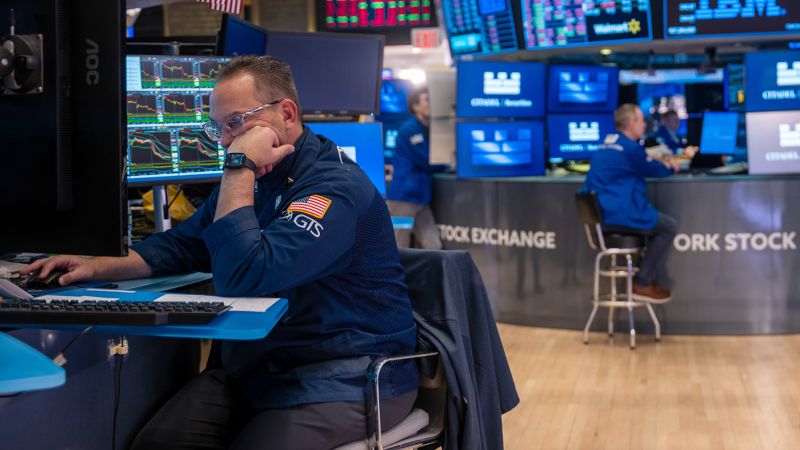
As a new quarter dawns, Wall Street finds itself on edge, bracing for the impact of President Donald Trump’s impending tariffs. These tariffs have sent tremors through the stock market, resulting in the most significant first-quarter slump in years. Investors are now grappling with uncertainty, fearing potential inflation and a drag on overall economic growth. The market volatility reflects the deep concerns surrounding Trump’s trade policies and their potential consequences for the U.S. economy.
This article examines the factors contributing to Wall Street’s anxiety, analyzes the potential economic ramifications of the tariffs, and explores the reactions of market strategists and economists to this unfolding situation. We will delve into the specific impacts on various sectors, including the automotive industry, and assess the broader implications for global markets. Finally, we will consider alternative investment strategies that may offer some protection against the turbulence caused by these policies.
Wall Street has been experiencing considerable volatility due to the uncertainty surrounding President Trump’s tariff proposals. The S&P 500 index has fallen by 4.6% this year, marking its worst start since 2022 and its worst quarter since September 2022. Market strategists are revising their forecasts for US stocks downward, expressing heightened concerns about the impact of Trump’s tariffs on the American economy. Analysts at Goldman Sachs, Barclays, and UBS have all lowered their year-end targets for the S&P 500, reflecting a growing sense of unease about the market’s future.
“The full extent of Trump’s tariffs is yet to be seen, and the lack of clarity has weighed on Wall Street,” said a CNN report. The market’s apprehension is compounded by the fact that the specific details of the tariffs and their potential impact remain unclear, leaving investors struggling to assess the risks involved.
Economists are warning that Trump’s tariffs could trigger inflation and hinder economic growth. Goldman Sachs has increased its estimate of the likelihood of a recession in the next 12 months to 35%, up from 20% previously. The bank cites tariffs as a factor that could hinder growth, increase unemployment, and contribute to inflation. This assessment underscores the potential risks associated with the administration’s trade policies and their impact on the broader economy.
Beyond the potential for a recession, the tariffs are also expected to put upward pressure on prices. “Economists anticipate the tariffs could spur inflation and drag on economic growth,” according to CNN. This is because tariffs increase the cost of imported goods, which can then be passed on to consumers in the form of higher prices.
In response to the tariff announcements, various markets have experienced significant fluctuations. Oil prices surged after Trump indicated he would impose secondary tariffs on if a deal to end the Russia-Ukraine war is not reached. West Texas Intermediate crude rose by 3% to $71.46 a barrel, while Brent crude gained 2.68% to $74.71 a barrel.
Meanwhile, gold prices reached a fresh record high, with the most actively traded gold futures contract in New York rising above $3,150 a troy ounce. Gold is often considered a safe haven during economic turmoil and a hedge against inflation, making it an attractive investment option during times of uncertainty.
Specific industries are also bracing for the impact of Trump’s tariffs. The automotive industry, in particular, is facing potential disruptions and increased costs. Trump’s recent statement that he “couldn’t care less” if automakers because of tariffs has raised concerns among industry leaders and investors. This statement suggests a willingness to prioritize trade policies over the well-being of the automotive sector, creating further uncertainty and anxiety within the industry.
“The administration cites fairer trade relationships as the goal, with reciprocity the governing principle for implementing tariffs. But beyond that, little is known about what this policy will entail,” analysts at Morgan Stanley said in a Monday note, highlighting the industry’s confusion and lack of clarity regarding the administration’s trade policies.
The impact of Trump’s tariffs is not limited to the United States. Global markets have also been shaken by the administration’s trade policies. In Japan, the Nikkei 225 tumbled more than 4% on Monday and closed in correction territory. Taiwan’s benchmark index also experienced a significant decline, closing down 10% for the quarter.
European markets have also been affected, with the STOXX 600 index sinking 1.5% and Germany’s DAX index falling 1.33%. These declines demonstrate the widespread impact of Trump’s tariffs on international markets and the interconnectedness of the global economy.
Given the current market volatility and uncertainty, investors are seeking strategies to protect their portfolios and navigate the challenging environment. One approach is to diversify investments across different asset classes, including stocks, bonds, and commodities. Diversification can help mitigate risk by reducing exposure to any single asset or market.
Another strategy is to consider investing in defensive stocks, which are less sensitive to economic downturns. These stocks tend to be in sectors such as healthcare, consumer staples, and utilities, which are less likely to be affected by changes in consumer spending or economic growth.
President Trump’s tariffs have injected a significant dose of uncertainty into Wall Street, leading to a tumultuous start to the year for the stock market. The potential economic ramifications of these policies, including the risk of recession and inflation, have fueled market anxiety and prompted analysts to revise their forecasts downward. The global impact of the tariffs is also evident, with international markets experiencing significant declines.
As investors grapple with this uncertainty, it is crucial to carefully assess the risks and potential rewards associated with different investment strategies. Diversification, defensive stocks, and a long-term perspective can help investors navigate the tariff storm and position their portfolios for future success. Ultimately, the long-term effects of President Trump’s trade policies will depend on a multitude of factors, including the administration’s future actions, the reactions of other countries, and the overall resilience of the global economy.
Leave a Reply