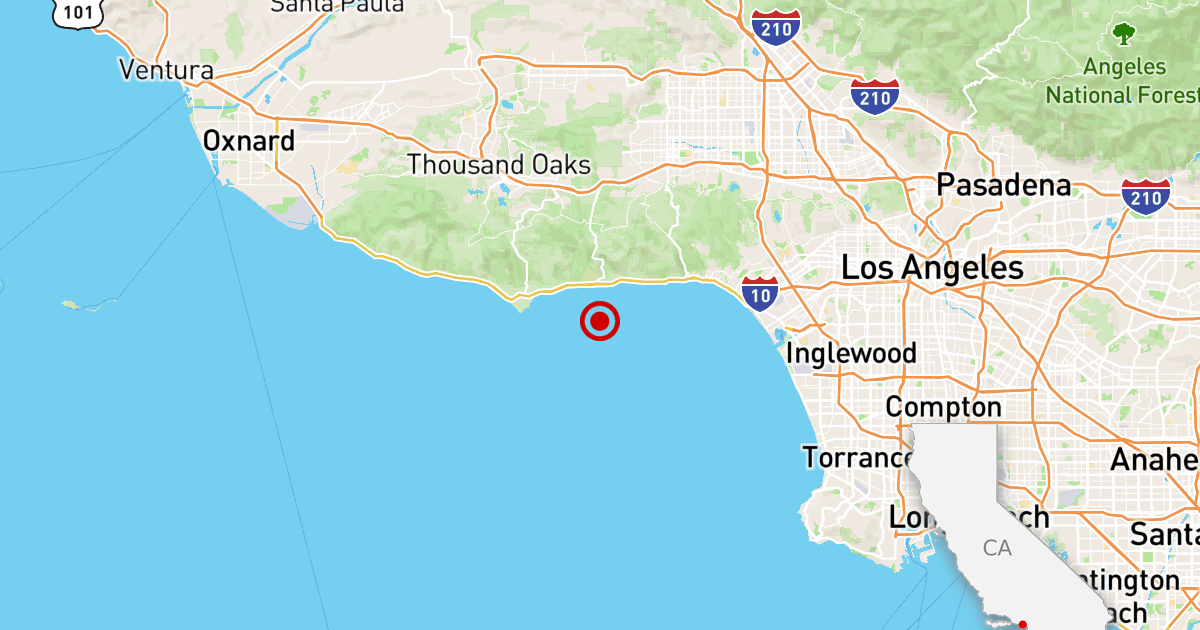
A minor earthquake struck near Malibu, California, on Wednesday, May 7, 2025, sending weak shaking through Malibu and parts of Westside Los Angeles. The 3.2 magnitude earthquake, while not causing significant damage, served as a reminder of the region’s seismic activity. This article provides an overview of the event, discusses recent seismic activity in the area, and highlights ongoing efforts to enhance earthquake preparedness in Southern California.
Earthquakes are a common occurrence in California due to its location along the San Andreas Fault system. While major earthquakes are relatively infrequent, smaller temblors like this one are a regular reminder of the ever-present seismic risk. Understanding these events and staying prepared is crucial for residents in the region.
We will delve into the details of Wednesday’s earthquake, explore the broader context of recent seismic events in Southern California, and provide information on how communities and individuals are working to mitigate the potential impact of future earthquakes.
Magnitude 3.2 Quake Sends Weak Shaking Through Malibu
According to the Los Angeles Times, a magnitude 3.2 earthquake occurred a few miles south of Malibu at 9:33 a.m. on Wednesday, May 7, 2025. The quake’s epicenter was approximately 2.7 miles southwest of Malibu Point. Though relatively small, the earthquake’s effects were felt in Malibu and as far away as Westside Los Angeles, as reported by residents on the U.S. Geological Survey’s (USGS) website.
A magnitude 3.2 earthquake is considered a minor event, typically causing little to no damage. However, it is often felt by people in the immediate vicinity and can serve as a reminder of the potential for larger, more destructive earthquakes. The USGS provides resources for reporting and tracking earthquakes, enabling scientists to monitor seismic activity and understand regional patterns.
The timing and location of the earthquake are significant in the context of broader seismic trends in Southern California. The region has experienced a series of minor to moderate earthquakes in recent months, prompting discussions about the area’s seismic vulnerability and the importance of preparedness measures.
Notable Seismic Activity in the Malibu Area
Wednesday’s earthquake is part of a series of seismic events that have occurred in and around Malibu over the past year. According to the Los Angeles Times, these include:
- A magnitude 4.6 earthquake on Feb. 9, 2024
- A magnitude 4.7 earthquake on Sept. 12, 2024
- A magnitude 4.1 earthquake on March 9, 2025
While none of these earthquakes caused significant damage, their frequency underscores the seismic activity in the region. These events serve as a reminder that Southern California is earthquake-prone and that preparedness is key. Monitoring seismic trends helps experts assess risks and refine strategies for mitigating potential impacts.
The clustering of earthquakes in the Malibu area raises questions about underlying geological factors and fault line dynamics. Scientists continue to study these patterns to better understand seismic behavior and improve predictive models.
Los Angeles and Orange Counties Await a Major Earthquake
Despite the recent increase in smaller earthquakes, Los Angeles and Orange Counties have not experienced a major earthquake in a long time. Since 1998, there has been only one earthquake of magnitude 5 or greater under the two heavily populated counties. That was a magnitude 5.1 earthquake centered in Brea in 2014, which caused more than $2.5 million in damage in that city, Fullerton, and La Habra.
The relative lack of major seismic events does not mean the risk is diminished. Experts warn that the absence of large earthquakes could be building up seismic pressure along fault lines, increasing the potential for a significant event in the future. This makes ongoing earthquake preparedness efforts even more critical.
Comparing the seismic history of Los Angeles and Orange Counties with that of other regions in California highlights the importance of remaining vigilant and proactive in preparing for potential earthquakes. This includes retrofitting vulnerable buildings, developing emergency response plans, and educating the public about earthquake safety.
Communities Take Action to Improve Seismic Safety
In response to the ever-present earthquake threat, several communities in Southern California have taken steps to improve seismic safety. In December, the Burbank City Council unanimously approved a mandatory retrofit ordinance for apartment buildings with a flimsy first floor, known as a “soft story,” that can collapse in an earthquake.
The Burbank law, which took effect on Jan. 19, affects wood-framed buildings that are at least two stories tall and were built using building code standards enacted before 1978. It requires that retrofits be completed by 2030. Burbank is also offering refunds on building permit fees to property owners who complete their retrofits early.
Other cities in Southern California, including Los Angeles, Torrance, Pasadena, Santa Monica, Culver City, West Hollywood, and Beverly Hills, have already opted to require retrofit work on soft-story apartment buildings. These efforts aim to reduce the risk of building collapse during earthquakes and protect residents from potential injuries or fatalities.
The Danger of Non-Ductile Concrete Buildings
Another significant concern in earthquake preparedness is the vulnerability of non-ductile concrete buildings. In these structures, an inadequate configuration of steel reinforcing bars can cause concrete to explode out of columns when shaken in an earthquake, leading to a catastrophic collapse. This flaw was discovered in the 1971 Sylmar quake.
Concrete buildings have collapsed in previous Los Angeles earthquakes, including a Kaiser Permanente clinic building and a Bullock’s department store building during the 1994 Northridge earthquake, and the newly built Olive View Medical Center during the 1971 earthquake. Collapses of concrete buildings have also caused significant deaths in earthquakes in Turkey, Mexico, Taiwan, and New Zealand.
Some cities in California, including Los Angeles, Torrance, Santa Monica, and West Hollywood, require non-ductile concrete buildings to be retrofitted. These retrofitting efforts are critical for enhancing the structural integrity of vulnerable buildings and minimizing the potential for collapse during seismic events.
Staying Informed and Prepared
To stay informed about earthquakes and enhance your preparedness, sign up for the Unshaken newsletter, which breaks down emergency preparedness into bite-size steps over six weeks. You can also learn more about earthquake kits, essential apps, and expert advice on earthquake readiness and resilience at latimes.com/Unshaken.
Preparing for earthquakes involves creating an emergency plan, assembling a disaster kit, and familiarizing yourself with safety procedures. These measures can help protect you and your family in the event of a major earthquake. Remember, being prepared is the best defense against the potential impacts of seismic activity.
Stay vigilant, informed, and proactive in taking steps to prepare for earthquakes. By doing so, you can help protect yourself, your family, and your community from the potential impacts of seismic activity.
Conclusion: The Ongoing Need for Earthquake Preparedness
The magnitude 3.2 earthquake near Malibu serves as a timely reminder of the ongoing seismic risk in Southern California. While this event was minor, it underscores the importance of staying informed, proactive, and prepared for potential earthquakes. As the region awaits a major seismic event, continued efforts to enhance preparedness are essential for protecting lives and minimizing damage.
Communities, governments, and individuals must work together to improve building codes, retrofit vulnerable structures, develop comprehensive emergency response plans, and educate the public about earthquake safety. By taking these steps, Southern California can better prepare for and mitigate the impacts of future earthquakes.
Remember, earthquake preparedness is not a one-time effort but an ongoing commitment. By staying informed, taking proactive measures, and working together, Southern California can build resilience and protect its communities from the ever-present threat of earthquakes.
Leave a Reply