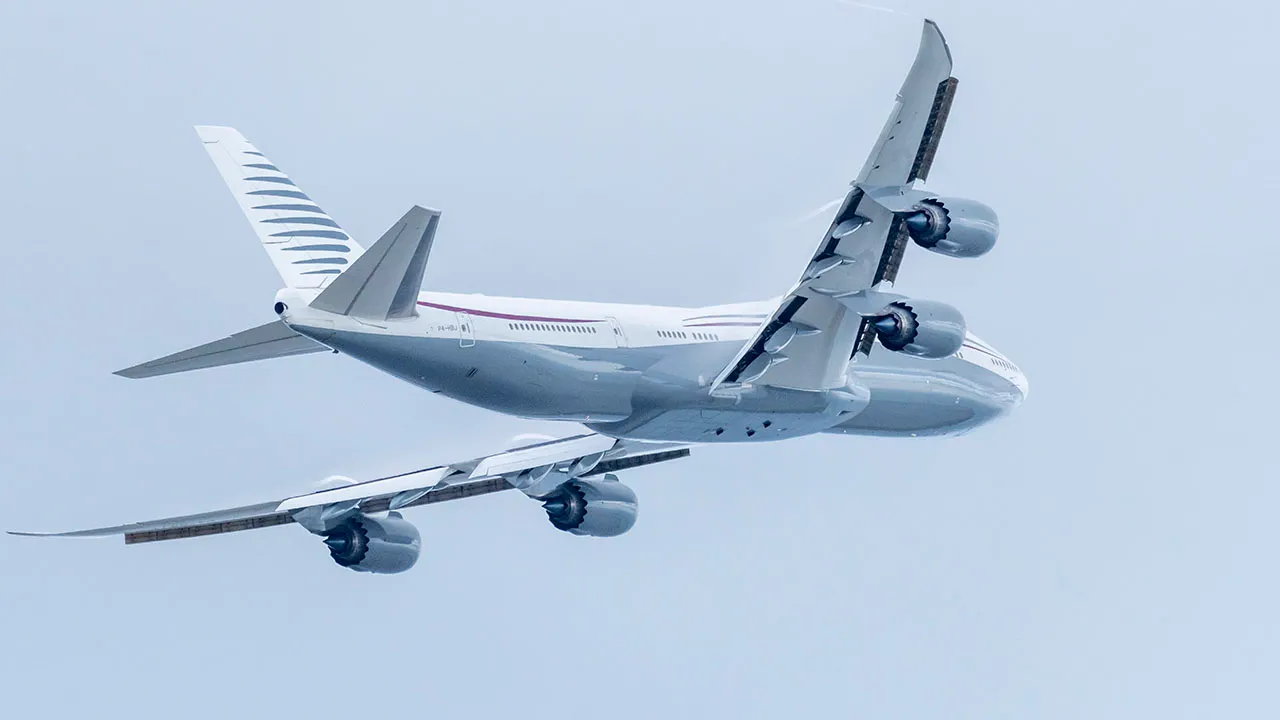
The recent offer of a Boeing 747 from Qatar to the United States Department of Defense (DOD) has ignited a significant constitutional debate, raising questions about the acceptance of gifts from foreign powers. President Trump has clarified that the $400 million aircraft is intended for the DOD and not for his personal use; however, this has not quelled concerns regarding potential violations of the Emoluments Clause of the U.S. Constitution. This situation brings to the forefront the complexities of international relations and the ethical considerations that come into play when accepting such high-value donations.
This article delves into the details surrounding Qatar’s gift, the legal and ethical challenges it presents, and the responses from various political figures. We will explore the constitutional implications, examine the arguments for and against the acceptance of the aircraft, and analyze the broader context of U.S.-Qatar relations.
Qatar’s Generous Offer: A Boeing 747 for the U.S.
Qatar’s royal family has offered to donate a Boeing 747 jumbo jet, valued at approximately $400 million, to the United States. This aircraft, potentially to be used as Air Force One, has stirred considerable controversy. President Trump addressed concerns by stating that the aircraft would be given to the Department of Defense, aiming to dispel notions of personal gain or impropriety. The White House maintains that the acceptance of this gift aligns with all applicable laws and regulations.
Despite these assurances, the offer has drawn criticism, particularly from those questioning the legality and ethics of accepting such a substantial gift from a foreign government. The debate centers on the Emoluments Clause of the U.S. Constitution, which prohibits public officials from accepting presents or emoluments from foreign states without congressional consent.
The Emoluments Clause: A Constitutional Quandary
The core of the controversy lies in the Emoluments Clause of the U.S. Constitution, which explicitly prohibits any person holding public office from accepting ‘any present, Emolument, Office, or Title, of any kind whatever, from any King, Prince, or foreign State.’ Critics argue that accepting the Boeing 747 could be construed as a violation of this clause, potentially opening the door to undue foreign influence.
Representative Torres, D-N.Y., has been particularly vocal, deriding the deal as a ‘flying grift’ and asserting that it directly contravenes the constitutional prohibition. In a letter to the Government Accountability Office, Torres called for an ethics investigation, emphasizing the need to uphold the integrity of public office and prevent any appearance of foreign sway.
Trump’s Defense: Saving Taxpayer Money
President Trump has defended the acceptance of the gift, arguing that it represents significant savings for American taxpayers. In a statement on his Truth Social platform, Trump clarified that the Boeing 747 is intended for the U.S. Air Force/Department of Defense and not for his personal use. He emphasized that Qatar, a nation the U.S. has successfully defended for many years, is providing the aircraft as a gift.
Trump further stated that the aircraft would serve as a temporary Air Force One until the new Boeing jets, which are significantly delayed, are completed. He questioned why American taxpayers should bear the cost of a new aircraft when a suitable alternative is being offered at no cost. Trump concluded by stating, ‘Only a FOOL would not accept this gift on behalf of our Country.’
Legal and Ethical Reviews: Scrutinizing the Gift
The acceptance of the Boeing 747 has been subjected to rigorous legal reviews by the White House counsel’s office and the Department of Justice to ensure compliance with all applicable laws. These reviews aim to determine whether the gift aligns with constitutional principles and ethical standards. The primary concern is whether accepting the aircraft could create a conflict of interest or an appearance of undue influence.
While the legal reviews are ongoing, the controversy underscores the need for clear guidelines regarding the acceptance of gifts from foreign entities. The outcome of these reviews will likely set a precedent for future dealings with foreign governments and the acceptance of high-value donations.
Air Force One: Current and Future
The current Air Force One fleet consists of two planes. In 2018, during his first term, President Trump awarded Boeing a $3.9 billion contract to manufacture two new jets. However, the construction of these jets is not expected to be completed until 2029. The Qatar-donated Boeing 747 could serve as a temporary replacement, addressing immediate needs while the new jets are under construction.
The decision to accept the gift could have long-term implications for the Air Force One fleet. It raises questions about the future of presidential travel and the potential for foreign governments to contribute to the maintenance and modernization of this essential component of U.S. government operations.
Political Fallout: Democrats Call for Investigation
The offer from Qatar has triggered strong reactions from various political figures. Democrats, in particular, have called for an ethics investigation, emphasizing the need to uphold the integrity of public office and prevent any appearance of foreign influence. Representative Torres’s letter to the Government Accountability Office underscores the depth of concern among some members of Congress.
The political fallout from this situation highlights the partisan divide on issues of ethics and foreign relations. While some view the acceptance of the gift as a pragmatic solution to budgetary constraints, others see it as a potential breach of constitutional principles and a threat to the independence of U.S. policy-making.
Conclusion: Implications and Future Considerations
The offer of a Boeing 747 from Qatar to the U.S. Department of Defense has opened a Pandora’s Box of legal, ethical, and political questions. While President Trump defends the acceptance of the gift as a means of saving taxpayer money, critics argue that it could violate the Emoluments Clause of the U.S. Constitution and create undue foreign influence. The ongoing legal reviews and political debates underscore the complexities of this situation.
As the U.S. navigates this unprecedented offer, it must carefully weigh the benefits against the potential risks. The decisions made in this case will likely set a precedent for future dealings with foreign governments and the acceptance of high-value donations. Ultimately, the goal must be to uphold the integrity of public office and ensure that U.S. policy decisions are made in the best interests of the American people.
Leave a Reply