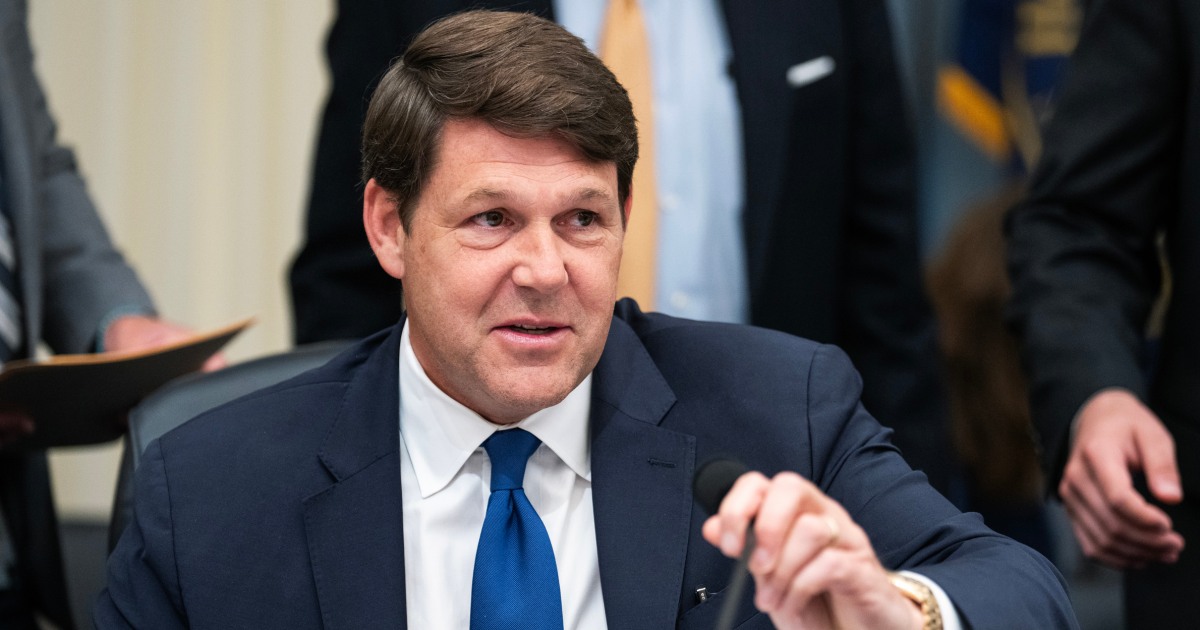
House Budget Committee Chair Jodey Arrington is walking a tightrope. Tasked with assembling President Trump’s ‘big, beautiful bill’ into a cohesive budget, he faces a Republican party divided over spending cuts, tax breaks, and priorities. Can Arrington bridge these divides and deliver a bill that passes both the House and Senate? The stakes are high, with potential ramifications for social programs, state budgets, and healthcare access.
This article examines the challenges confronting Arrington, the key players involved, and the potential outcomes of this legislative battle. We’ll delve into the conflicting demands of different Republican factions, the looming deadlines, and the potential consequences of failure. The clock is ticking, and the future of Trump’s economic agenda hangs in the balance.
From the SALT deduction demands of blue state Republicans to the Freedom Caucus’s insistence on draconian spending cuts, Arrington must navigate a minefield of competing interests. This isn’t just about numbers; it’s about political survival and the future direction of the Republican party.
The Budget Framework: A Foundation of Discord
Arrington’s initial attempt at a budget framework was met with resistance in the Senate, highlighting the deep divisions within the Republican party. While a subsequent agreement allowed the process to move forward on a party-line basis, it also sidelined Democrats, creating further political friction. The framework provided broad instructions to congressional committees, leaving the details and the potential for conflict to the committee chairs.
As Hayes Brown from MSNBC noted, ‘All the House committees have filled in the blanks now, passing their final works on to Arrington to assemble.’ This seemingly positive step masks the underlying tensions. The bills, while individually passed, present a collective challenge due to conflicting priorities and ideological divides.
The key question now is whether Arrington can transform these disparate pieces into a unified whole that satisfies enough members of his own party to pass. The margin for error is razor-thin, and the consequences of failure could be significant.
The success of this endeavor hinges on Arrington’s ability to broker compromises and find common ground. However, with entrenched positions and limited time, the odds are stacked against him.
SALT Deduction: A Blue State Battleground
One of the most contentious issues is the state and local tax (SALT) deduction. Blue state Republicans are adamant about including a provision to raise or eliminate the cap on SALT deductions, a move that would disproportionately benefit their constituents. Five of these Republicans have already declared the current $30,000 cap included in the Ways and Means Committee’s section as insufficient.
With a narrow majority in the House, these five votes hold significant power. ‘As a reminder, if all members are present, it will only take four Republicans voting against the bill to tank it, given united Democratic opposition,’ Brown writes. This underscores the precarious position Arrington finds himself in.
Finding a compromise on the SALT deduction that satisfies both blue state Republicans and fiscally conservative members will be a major challenge. The issue cuts to the heart of regional economic disparities and ideological differences within the party.
The resolution of this issue will likely determine the fate of the entire budget package. Failure to address the concerns of blue state Republicans could lead to a complete collapse of the process.
Spending Cuts: A Balancing Act
Proposed cuts to various programs are another source of conflict. More than a dozen House Republicans are concerned about the House Energy and Commerce Committee’s proposed cuts, which could negatively impact their districts. Similarly, concerns exist about the Agriculture Committee’s plans to alter SNAP benefits, potentially creating holes in state budgets or removing hundreds of thousands from the program.
These concerns highlight the difficult choices Arrington faces in balancing fiscal responsibility with the needs of individual districts and vulnerable populations. Any attempt to significantly reduce spending will inevitably face opposition from those who stand to lose.
The challenge lies in finding a way to achieve meaningful spending cuts without alienating too many members of the Republican caucus. This will require careful negotiation and a willingness to compromise on specific program cuts.
The debate over spending cuts underscores the fundamental differences in priorities within the Republican party. Finding a path forward that satisfies both fiscal hawks and those concerned about the social safety net will be a difficult task.
The Freedom Caucus: A Force to Be Reckoned With
Complicating matters further is the House Freedom Caucus, a group of staunch conservatives who believe the committees included too much budget gimmickry and not enough tangible spending cuts. They are particularly critical of provisions in the Energy and Commerce bill that they believe don’t go far enough to reduce spending on healthcare.
The Freedom Caucus has proven to be a powerful force in the House, and their opposition could be fatal to the budget package. ‘Most of those issues could be resolved were it not for the group with the most leverage: the House Freedom Caucus,’ Brown observes.
Appeasing the Freedom Caucus will require significant concessions on spending cuts, which could further alienate other factions within the Republican party. Arrington must navigate this delicate balance with extreme care.
The Freedom Caucus represents a significant obstacle to any compromise. Their unwavering commitment to fiscal conservatism and their willingness to disrupt the legislative process make them a force to be reckoned with.
Speaker Johnson’s Challenge: Maintaining Control
Speaker Mike Johnson is attempting to manage the situation and prevent a revolt on the House floor. However, even getting the bill through the Budget Committee is proving to be a challenge. Reps. Chip Roy and Roy Norman, both Freedom Caucus members, have already stated their opposition to the current bill.
Johnson’s leadership is being tested as he struggles to unite his party behind a common budget vision. The success or failure of this endeavor will likely have significant implications for his future as Speaker.
The fact that members of the House Rules Committee, the next hurdle before a full House vote, are already expressing opposition underscores the severity of the situation. Johnson must find a way to bring these dissenting voices on board if he hopes to pass the budget package.
The speaker faces an uphill battle in navigating the conflicting demands of different factions within his party. His ability to forge compromises and maintain party unity will be crucial to the success of this legislative effort.
Senate Hurdles and Beyond
Even if Arrington manages to pass a bill through the House, the challenges don’t end there. Disagreements already exist in the Senate over the scope of the spending cuts. Any changes made by the Senate will require further negotiations and could potentially unravel the entire package.
The legislative process is a complex and unpredictable one, and the budget package faces numerous obstacles before it can become law. The potential for gridlock and failure is high.
The need for compromise and negotiation extends beyond the House and into the Senate. Reaching a consensus between the two chambers will require significant effort and a willingness to make concessions.
The ultimate fate of the budget package remains uncertain. The road ahead is fraught with challenges, and the outcome will depend on the ability of key players to bridge divides and find common ground.
Conclusion: A Puzzle with No Easy Solution
Jodey Arrington faces a near-impossible puzzle. He must reconcile competing demands, navigate ideological divides, and overcome procedural hurdles to pass a budget package that satisfies enough members of his own party. The stakes are high, and the consequences of failure could be significant.
The outcome of this legislative battle will shape the future of Trump’s economic agenda and have a profound impact on the lives of millions of Americans. The decisions made in the coming weeks will determine the direction of the country for years to come.
Whether Arrington can successfully assemble this complex puzzle remains to be seen. But one thing is certain: the task before him is one of the most challenging in Washington, and the world is watching to see if he can succeed.
Leave a Reply