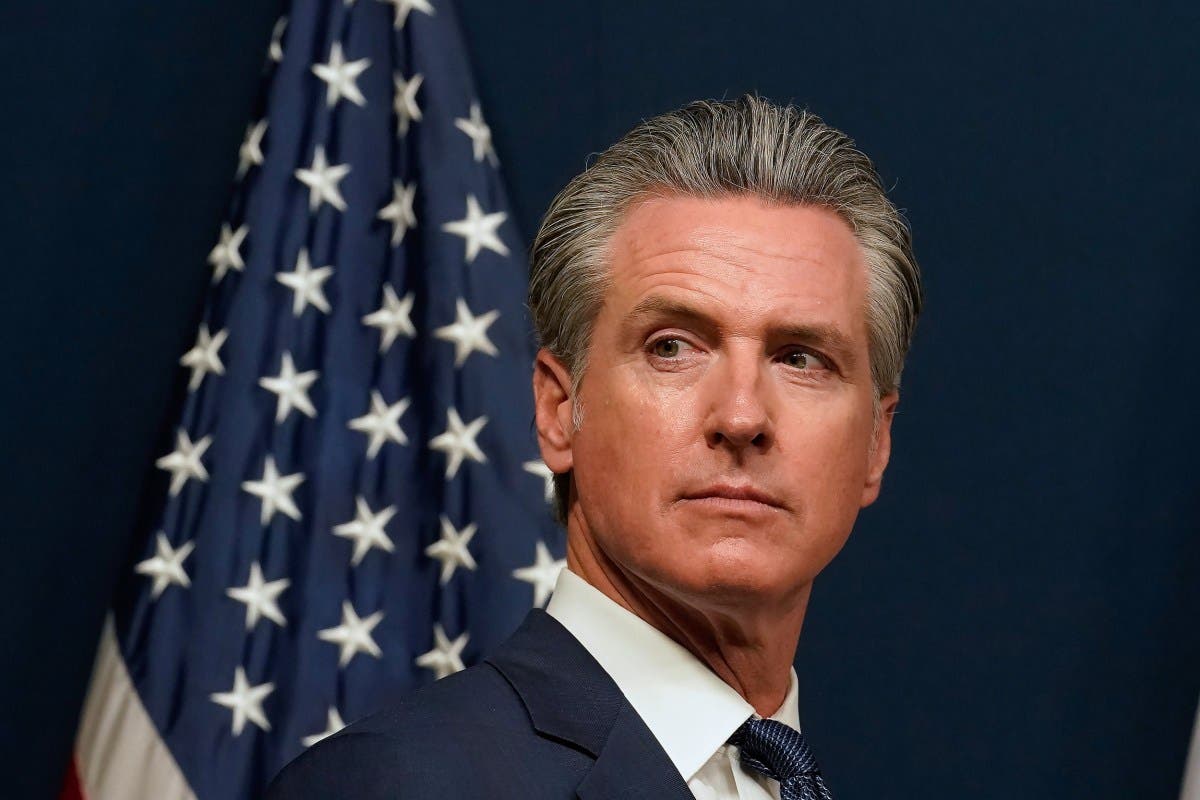
California Governor Gavin Newsom recently took to social media to troll former President Donald Trump, using remarks made by Defense Secretary Pete Hegseth about “fat troops.” This incident highlights the ongoing political tension between Newsom and Trump, often played out through social media jabs and public statements.
Hegseth’s comments, criticizing “fat generals and admirals,” provided Newsom with an opportunity to target Trump, posting a photo of the former president at McDonald’s. This act underscores the increasing use of social media as a battleground for political messaging and personal attacks.
In this article, we will dissect the details of Newsom’s troll, the context of Hegseth’s controversial remarks, and the broader implications of such political antics. Additionally, we will explore the reactions from various political figures and the potential impact of this exchange on public perception.
Pete Hegseth’s Controversial Remarks on Military Fitness
Defense Secretary Pete Hegseth’s statements about the physical fitness of military personnel have sparked considerable debate. Speaking at a military leadership event in Virginia, Hegseth stated, “It’s tiring to look out at combat formations, or really any formation, and see fat troops.” He further extended his criticism to military leadership, deeming it “completely unacceptable to see fat generals and admirals in the halls of the Pentagon.”
Hegseth emphasized that physical fitness and appearance are paramount, advocating for stricter standards across all ranks. He announced that every service member must undergo a physical fitness test and meet height and weight requirements twice a year. “Whether you’re an airborne Ranger or a chairborne Ranger, a brand new private or a four-star general, you need to meet the height and weight standards and pass the PT tests,” Hegseth declared.
These remarks are part of a broader initiative to tighten military policy on physical fitness, reflecting a renewed emphasis on combat readiness. Hegseth also addressed grooming standards, stating that long hair and beards would no longer be permitted among service members. “No more beardos. The era of rampant and ridiculous shaving profiles is done,” he added. His full speech can be found on the Defense Department’s website.
Gavin Newsom’s Retaliation on Social Media
California Governor Gavin Newsom swiftly responded to Hegseth’s comments by trolling Donald Trump on social media. Newsom reposted a video of Hegseth’s remarks, accompanied by a photo of Trump removing his jacket at a McDonald’s. Newsom’s caption read, “I guess the Commander in Chief needs to go!”
This jab is consistent with Newsom’s history of using social media to criticize Trump and his administration. Newsom’s press office also posted an AI-generated photo of Trump eating McDonald’s with the caption, “IT’S COMPLETELY UNACCEPTABLE TO SEE A FAT COMMANDER IN CHIEF IN THE HALLS OF THE WHITE HOUSE!”
Newsom’s actions highlight the evolving role of social media in political discourse, where leaders often engage in direct and sometimes provocative exchanges. By leveraging visual content and concise messaging, Newsom effectively conveyed his critique of Trump’s fitness in a manner designed to resonate with a broad online audience.
Reactions from Political Figures
Hegseth’s speech and Newsom’s subsequent trolling elicited varied reactions from other political figures. Democratic Senator Chris Murphy of Connecticut responded to Hegseth’s speech on X, stating, “He billed the taxpayers millions to fly every general to Washington to hear this weirdo drivel.”
The Democratic Party also weighed in on X, simply stating, “That’s interesting,” in response to Hegseth’s address. These reactions underscore the divisive nature of Hegseth’s comments and the broader political polarization surrounding discussions of military fitness and leadership.
The political discourse surrounding these events illustrates the complex interplay between policy announcements, social media commentary, and public perception. The rapid dissemination of opinions and criticisms through online platforms amplifies the impact of such exchanges, shaping the narrative and influencing public sentiment.
“It all starts with physical fitness and appearance.” – Pete Hegseth
Changes to Military Policy
The Trump administration held a rare in-person meeting with top U.S. military officials, who were summoned from around the world, at Quantico. During the event, the administration announced several changes to military policy, with a strong emphasis on physical fitness.
Hegseth announced that every service member would be required to take a physical fitness test and meet height and weight requirements twice a year. Additionally, Hegseth emphasized that those in combat jobs should meet the “highest male standard.” He stated, “I don’t want my son serving alongside troops who are out of shape, or in a combat unit with females who can’t meet the same combat arms physical standards as men, or troops who are not fully proficient on their assigned weapons, platform, or task, or under a leader who was the first but not the best.”
These policy changes signal a renewed focus on combat readiness and physical excellence within the U.S. military. The emphasis on uniform standards and rigorous testing aims to ensure that all service members are physically prepared for their assigned duties. The full details of these policy changes are available on the Department of Defense’s official website.
Grooming Standards
In addition to physical fitness requirements, Defense Secretary Pete Hegseth announced changes to grooming standards within the military. Hegseth stated that long hair and beards would no longer be permitted among service members. “No more beardos. The era of rampant and ridiculous shaving profiles is done,” he declared.
This decision reflects a desire to maintain a more uniform and professional appearance across the armed forces. The enforcement of stricter grooming standards is intended to instill discipline and enhance the overall image of the military.
These grooming standards have sparked debate among service members, with some expressing concerns about personal expression and religious freedom. However, the military maintains that these standards are essential for maintaining unit cohesion and projecting a professional image.
Conclusion
The exchange between Gavin Newsom and Donald Trump, triggered by Pete Hegseth’s remarks on military fitness, underscores the dynamic interplay between politics, social media, and public perception. Newsom’s strategic use of social media to troll Trump highlights the evolving nature of political discourse.
Hegseth’s emphasis on physical fitness and grooming standards within the military reflects a broader effort to enhance combat readiness and discipline. The reactions from various political figures and the public underscore the divisive nature of these issues.
Ultimately, this incident serves as a reminder of the importance of clear communication, accountability, and responsible leadership in shaping public policy and maintaining public trust. As the political landscape continues to evolve, it is essential to critically assess the impact of social media exchanges and policy announcements on public discourse and national unity.
Leave a Reply