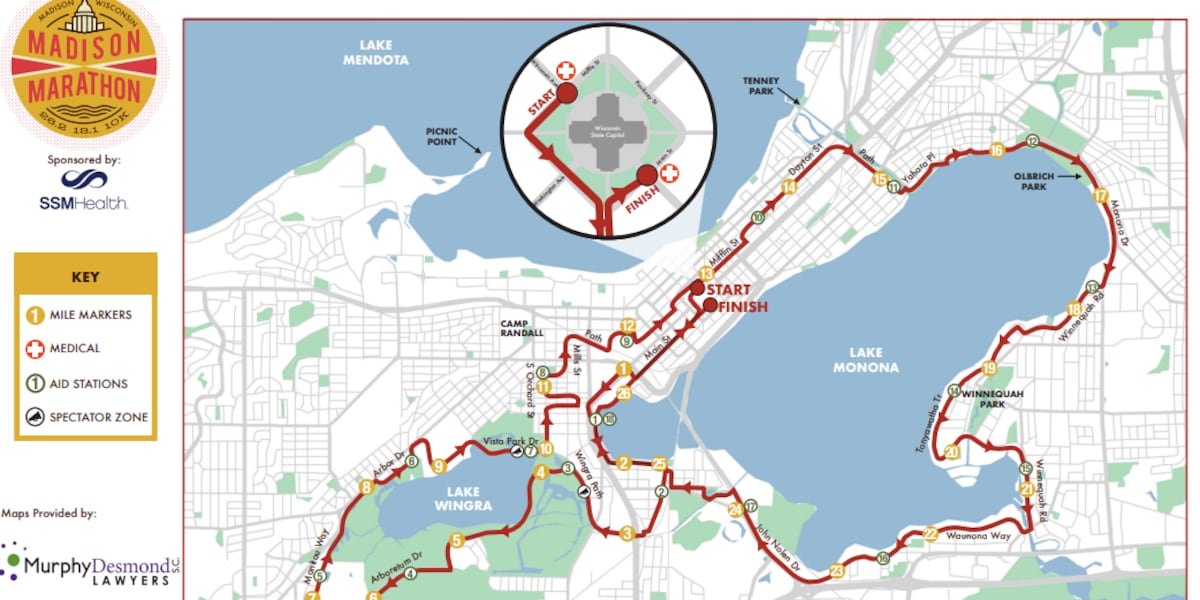
The Madison Marathon is set to take place this weekend, and city officials are urging drivers to be aware of significant road closures. This annual event brings thousands of runners to the heart of Madison, and while it’s a celebration of athleticism and community, it also requires careful planning for motorists. This article provides a comprehensive overview of all road closures, alternative routes, and important times to help you navigate the city during the marathon. Knowing these details will ensure you avoid delays and contribute to a smooth and safe event for everyone.
Whether you’re a resident, commuter, or visitor, understanding the traffic impacts of the Madison Marathon is essential. From Capitol Square to the UW Arboretum, Vilas Park, and around Lake Monona, the race course winds through key areas of the city. We’ll break down the specific closures, their timings, and alternate routes to help you plan your weekend travel. Stay informed and prepared to make the most of your weekend while accommodating this exciting city event.
In this article, we will cover:
- Capitol Square Closures
- Roads Closed Beginning Saturday
- Road Closures Following the Farmers’ Market
- Roads with Full or Partial Lane Closures During the Marathon
- Downtown Roads NOT Impacted by the Madison Marathon
Capitol Square Closures for the Madison Marathon
Capitol Square will experience complete road closures, with all roads on the square remaining closed until Sunday evening. This is a central hub for the marathon, so plan your routes accordingly if you typically travel through this area.
The Capitol Square closures are necessary to ensure the safety of the runners as they begin and end the race. These closures are comprehensive, affecting all vehicular traffic around the square. As such, it is advisable to avoid this area entirely unless you are participating in or attending the marathon.
According to city officials, “The Capitol Square closures are essential for the safety of participants and the overall success of the event. We appreciate the public’s cooperation in adhering to these restrictions.”
For those who need to access areas near Capitol Square, consider using alternative routes such as East Washington Avenue, Johnson Street, or Gorham Street, which will remain open. Be prepared for increased pedestrian traffic and possible congestion in these areas.
Roads Closed Beginning Saturday for the Madison Marathon
Anticipate closures starting Saturday at 8 a.m. on Wisconsin Ave. between Mifflin St. and Dayton St., as well as the 100 and 200 blocks of Martin Luther King Jr. Blvd. These closures are in place to facilitate preparations for the Sunday marathon.
These early closures will primarily affect downtown traffic. If you frequent these areas on Saturdays, be sure to adjust your plans. Consider using alternative routes such as State Street, which will remain open, or John Nolen Drive to bypass the downtown core.
City officials stated, “We understand that these early closures may cause some inconvenience, but they are crucial for setting up the necessary infrastructure for the marathon. We appreciate your understanding.”
Local businesses in these areas will remain open, so if you plan to visit them, allow extra time for parking and walking. Check local parking garages for availability and consider parking further away from the immediate closure zones.
Road Closures Following the Farmers’ Market for the Madison Marathon
After the Farmers’ Market concludes, additional roads will close to prepare for the race: Pinckney St. (between King St. and E. Mifflin), Main St. (between Carroll and Pinckney St.), Mifflin St. (between Pinckney and State St.), Carroll St (between State St. and Main St.), and the 100 Block of East Washington Ave.
These closures will impact access to and from the Capitol Square area. If you typically use these routes after the Farmers’ Market, be prepared to take alternate paths. Consider using E. Washington Avenue or side streets to navigate around the closures.
“We coordinate these closures to minimize disruption while ensuring the marathon route is secure,” said a city spokesperson. “We encourage residents to plan their routes in advance and be patient with any delays.”
Residents and visitors should be aware that parking restrictions will also be in effect in these areas. Be sure to check posted signs for temporary no-parking zones and adjust your parking plans accordingly.
Roads with Full or Partial Lane Closures During the Madison Marathon
During the Madison Marathon, several roads will have full or partial lane closures to accommodate the runners. These include North Shore Drive/Proudfit Street (lane closures on the Monona Bay side), W. Washington Avenue (runners in coned lane until 8 a.m.), Park Street (runners in coned lane between W. Washington and Drake St.), Monona Drive (between Winnequah Road and Margaret Street), Fish Hatchery Road (runners crossing at W. Wingra Drive), Williamson/Winnebago (runners crossing at Thornton Avenue), Monroe Street (one lane closed between Commonwealth Avenue and Woodrow Street), E. Mifflin Street, and E. Dayton Street.
These closures will cause significant traffic disruptions, especially during the morning hours. If you must travel in these areas, expect delays and consider using alternative routes. Police officers will be stationed throughout the course to help with traffic flow, but drivers are encouraged to find alternate routes or plan for extra time.
According to the Madison Police Department, “Our officers will be working diligently to manage traffic and ensure the safety of both runners and drivers. We ask for your patience and cooperation during the marathon.”
It’s crucial to pay attention to signage and directions from traffic officials. The coned lanes and crossing points are designed to keep runners safe, and drivers should exercise caution and reduce their speed in these areas.
Downtown Roads NOT Impacted by the Madison Marathon
Despite the extensive closures, some downtown roads will remain open during the Madison Marathon. These include Inbound John Nolen Drive, E. Washington Avenue, Campus Drive, Johnson Street, Gorham Street, Langdon Street, and John Nolen Drive. These routes can be used to navigate around the affected areas.
Knowing which roads will remain open is essential for planning your travel during the marathon. These routes provide key access points to various parts of the city and can help you avoid the worst of the congestion.
City traffic engineers advise, “Utilizing these open routes can significantly reduce travel time and help maintain smooth traffic flow throughout the city during the marathon.”
However, even these roads may experience increased traffic volume due to the closures elsewhere. It’s still a good idea to allow extra time for your journey and stay updated on real-time traffic conditions.
The Madison Marathon will bring significant road closures and traffic adjustments to the city. By understanding the specific closures, timings, and alternative routes, you can navigate the city more efficiently and safely during the event. Plan ahead, stay informed, and be patient to ensure a smooth weekend for everyone.
Whether you are a resident, commuter, or visitor, knowing the details of these road closures is essential. Use the information provided to adjust your travel plans and minimize any disruptions. By working together and staying informed, we can all contribute to a successful and enjoyable Madison Marathon weekend.
Remember to check the WMTV15 News app for live traffic updates and any last-minute changes to the road closures. Stay safe and enjoy the Madison Marathon!
Leave a Reply