The Prince William County School Board (PWCS) has recently approved a controversial decision to extend teacher contract hours by 30 minutes per workday, set to begin in the 2026-27 school year. This move, made despite strong opposition from many educators, has sparked concerns over compensation and the value placed on teachers’ time and input. This article delves into the details of the decision, the reactions from teachers and union representatives, and the potential implications for the PWCS workforce.
The decision highlights the ongoing tensions between the school board and its educators, particularly regarding issues of compensation and consultation. Understanding the perspectives of all stakeholders is crucial to navigating the challenges and ensuring a positive learning environment for students in Prince William County. We’ll cover the school board vote, teacher and union reactions, and school board member comments.
PWCS School Board Approves Additional 30 Minutes
In a 4-3 vote on Wednesday night, the Prince William County School Board approved a change to a School Board regulation to ensure the classroom teaching assignment, planning period, and lunch period of teachers does not exceed 7.5 hours. Justin Wilk, Lisa Zargarpur, and Richard Jessie cast the dissenting votes, while Erica Tredinnick was absent from the meeting.
This decision means that starting in the 2026-27 school year, teachers in Prince William County will be required to work an additional 30 minutes each day. The specifics of how this extra time will be utilized remain unclear, adding to the uncertainty and anxiety among teachers.
According to WTOP News, prior to the vote, members of the Prince William Education Association (PWEA) gathered to protest the proposed extension, highlighting their concerns about the lack of input and compensation for the additional time.
“The School Board is considering adding 30 more minutes to every teacher’s workday without our input and without additional compensation,” said Carol Bauer, the Virginia Education Association president.
Teacher and Union Reactions
The decision has been met with strong disapproval from teachers and union representatives, who argue that it devalues teacher compensation and violates the spirit of collective bargaining.
Carol Bauer, president of the Virginia Education Association, stated that the change is a violation of the spirit of the collective bargaining process. She emphasized that while the previous PWEA bargaining team did not specifically include contract hours in the CBA, the contract was negotiated with the current hours in mind.
Princess Moss, the National Education Association vice president, echoed these sentiments, stating that a decision of this magnitude should never be considered without consulting union leadership and bringing PWEA to the table. She also highlighted that increasing hours without additional pay devalues teacher compensation.
“Moreover, Moss said, the change in teacher hours ‘devalues’ teacher compensation by increasing hours without additional pay.”
Community Members Voice Concerns
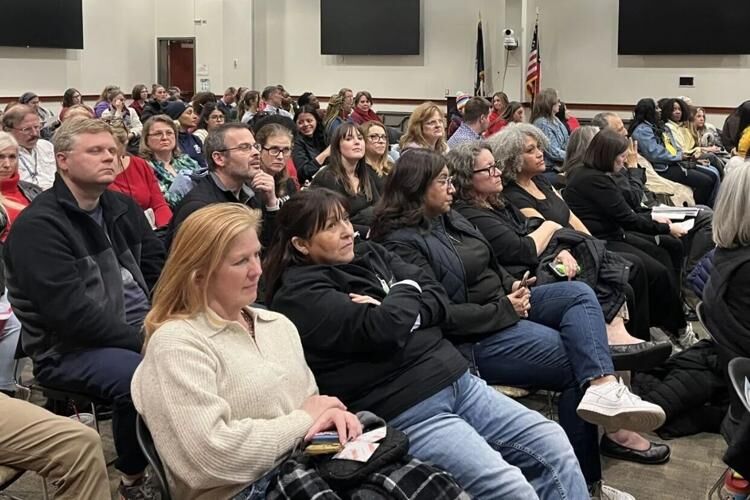
Teachers and community members filled the board room during citizen’s comment time, with nearly all imploring the board to either delay the vote or vote against the additional 30 minutes. Glorya Jordan, a parent in the county, emphasized the importance of including teachers in decisions that impact their daily lives and classrooms.
Emily Cherry, a teacher in the division and one of the co-chairs of PWEA’s organizing and membership ad hoc committee, urged the board to delay the vote until meaningful dialogue with PWEA could take place. She highlighted that teachers are already working far beyond their contract hours, grading papers, lesson planning, and responding to emails outside of the school day.
“Through this vote, the School Board is sending the message that they do not see that the hours we spend in abundance of our contract hours are enough,” Cherry stated.
Board Member Comments
During the meeting, board members shared their perspectives on the issue. Loree Williams, the Woodbridge District board member, acknowledged the feelings of the teachers but emphasized the business side of education. However, her comments were met with strong reactions from the audience, who turned their backs on her.
Jennifer Wall, the Gainesville District board member, stated that the desire to offset the 30-minute increase in time with an increase in teacher pay would be addressed during the upcoming budget process. She assured that there would be flexibility and continued discussion.
Richard Jessie, who voted against the increase, expressed concerns about the potential financial damage to teachers and the lack of engagement with stakeholders. He also questioned whether the additional time would improve academic performance.
“There is a fundamental difference between a teacher choosing to stay, to work late or come early versus the board dictating how long they must remain in the building,” said Wilk.
Potential Impact on Workforce
Justin Wilk, another dissenting voter, emphasized the potential impact of the 30-minute increase on the division’s workforce. He argued that dictating the number of hours teachers must remain in the building sends an ominous message.
The lack of clarity regarding how the additional 30 minutes will be used adds to the uncertainty and anxiety among teachers. Without proper communication and collaboration, this decision could negatively impact teacher morale and retention rates.
The Prince William County School Board’s decision to extend teacher contract hours has sparked significant controversy. The lack of consultation with teachers and union representatives, coupled with concerns about compensation and the value of teacher time, has created tensions between the board and its educators.
Conclusion
The decision by the PWCS School Board to extend teacher contract hours by 30 minutes has ignited a firestorm of controversy. Concerns over compensation, lack of consultation, and the potential impact on teacher morale have been voiced by educators, union representatives, and community members alike.
As the 2026-27 school year approaches, it remains to be seen how the additional 30 minutes will be implemented and whether the board will address the concerns raised by teachers and the community. Open communication, collaboration, and a genuine commitment to valuing teachers’ time and input will be crucial to navigating these challenges and ensuring a positive outcome for all stakeholders in Prince William County.
Ultimately, the success of this decision hinges on the PWCS School Board’s ability to listen to and address the concerns of its educators. Failure to do so could have far-reaching consequences for the quality of education and the well-being of teachers in Prince William County.
Leave a Reply