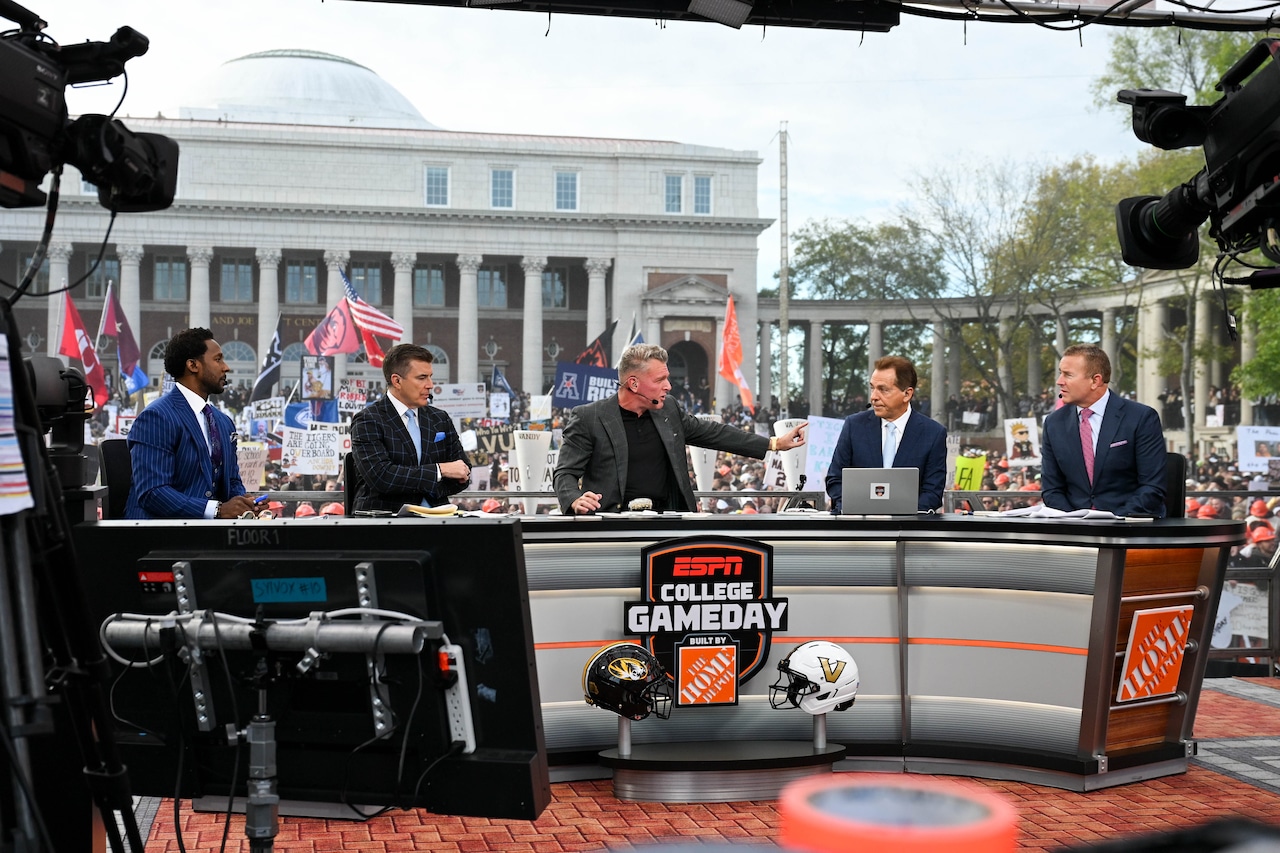
Nick Saban, the legendary football coach, recently shared his impassioned views on Lane Kiffin’s career choices and the swirling debates around potential conflicts of interest involving Creative Artists Agency (CAA) and agent Jimmy Sexton. During an appearance on ESPN’s College GameDay, Saban didn’t hold back, offering insights into coaching transitions, loyalty, and the ever-present ‘paranoia’ within college football. This article delves into Saban’s fiery commentary, exploring the nuances of Kiffin’s decisions and the broader implications for college football programs.
The discussion arose amidst speculation about Kiffin’s potential move to LSU and the challenges of balancing new opportunities with current team commitments. Saban, along with other GameDay analysts, addressed the complexities of such transitions, shedding light on the pressures faced by coaches and the impact on their teams. Furthermore, the involvement of CAA, representing multiple GameDay personalities, added another layer to the debate, raising questions about objectivity and fairness. This analysis will dissect Saban’s arguments, providing a comprehensive overview of the key issues discussed.
Lane Kiffin’s Potential LSU Move: Saban’s Perspective
The College GameDay crew didn’t shy away from addressing the rumors surrounding Lane Kiffin and a potential move to LSU. Nick Saban, who has a history with Kiffin as a former assistant, offered a unique perspective on the situation. Saban acknowledged the difficult circumstances coaches face when considering new opportunities while still committed to their current teams. He emphasized the importance of weighing personal and professional aspirations against the loyalty owed to players and staff.
“This is a difficult circumstance to be in,” Saban stated, highlighting the timing challenges that often accompany coaching transitions. He explained that the calendar rarely aligns perfectly, forcing coaches to make tough decisions about balancing immediate commitments with future prospects. This commentary underscores the constant pressure coaches face in a high-stakes environment where opportunities can arise unexpectedly. Saban’s insights provide valuable context for understanding the complexities of Kiffin’s situation and the broader dynamics of coaching carousel.
While Saban didn’t explicitly endorse or criticize Kiffin’s potential move, he underscored the need for coaches to carefully consider all factors before making a decision. His remarks serve as a reminder of the delicate balance between personal ambition and professional responsibility in the world of college football.
Navigating CAA and Potential Conflicts of Interest
One of the more contentious aspects of the GameDay discussion centered on the role of Creative Artists Agency (CAA) and potential conflicts of interest. Several GameDay analysts, including Saban, Rece Davis, and Desmond Howard, are represented by CAA, which also represents Lane Kiffin through Jimmy Sexton. This overlap raised questions about objectivity and whether the analysts could provide unbiased commentary on Kiffin’s situation.
Rece Davis addressed these concerns directly, stating, “Several of us who are represented by agents at CAA, that’s not unusual. CAA represents a lot of different things.” Davis sought to downplay any potential bias, emphasizing that CAA’s diverse clientele mitigated the risk of undue influence. However, the issue remains a sensitive one, as the perception of impartiality is crucial for maintaining credibility in sports analysis.
The debate over CAA’s influence highlights the challenges of navigating a world where personal and professional relationships often intertwine. While it’s not necessarily unethical for analysts to be represented by the same agency as coaches they cover, it does raise legitimate questions about potential conflicts of interest. Ensuring transparency and adhering to journalistic ethics are essential for maintaining public trust in such situations.
Saban’s Counsel: Advice to Coaches in Transition
Saban elaborated on the advice he typically offers to coaches contemplating career moves, providing valuable insights into his leadership philosophy. He emphasized the importance of evaluating all available options and making informed decisions based on careful consideration. Saban stressed that coaches should prioritize the well-being of their families and the long-term trajectory of their careers.
“I think it’s normal for coaches to be paranoid,” Saban said, acknowledging the inherent anxieties that accompany coaching transitions. He noted that administrators often share these anxieties, leading to complex negotiations and potential roadblocks. Saban recounted his experiences with former assistants like Kirby Smart, who left Alabama to coach at Georgia, illustrating how transitions can be managed effectively with open communication and mutual respect.
Saban’s willingness to share his counsel underscores his commitment to mentoring and developing future leaders in college football. His advice provides a framework for coaches navigating challenging career decisions, emphasizing the importance of integrity, transparency, and a focus on long-term goals.
The Kiffin-Alabama Split: A Different Scenario
Kirk Herbstreit pointed out that Lane Kiffin’s departure from Alabama prior to the national championship game differed significantly from other coaching transitions. Saban elaborated on the circumstances surrounding Kiffin’s exit, explaining that it was a mutual decision based on the challenges Kiffin faced in balancing his responsibilities at Alabama with his new job at Florida Atlantic.
“That was a situation where Lane was struggling to handle taking a new job, hire a new staff, recruiting new players at a new place that was Florida Atlantic, and doing his job at (Alabama) the way the players and the rest of the staff thought he should,” Saban explained. He emphasized that the split was amicable, recognizing that it was in the best interest of both parties for Kiffin to focus solely on his new role.
The Kiffin-Alabama situation serves as a cautionary tale about the difficulties of juggling multiple responsibilities during a coaching transition. While Saban has generally supported assistants who seek new opportunities, he also recognizes the importance of maintaining focus and dedication to the current team. The Kiffin episode underscores the need for clear communication and realistic expectations when navigating such transitions.
Integrity vs. Paranoia: Saban’s Final Thoughts
Saban concluded his remarks by addressing the pervasive sense of ‘paranoia’ that often surrounds coaching transitions. He argued that while some level of caution is understandable, it’s crucial to trust in the integrity of coaches and their commitment to their players. Saban cited his experiences with assistants who left for new jobs while still contributing to Alabama’s success, emphasizing that it is possible to manage transitions effectively with mutual respect and open communication.
“Everybody’s paranoid about this,” Saban said, challenging the notion that coaching transitions inevitably lead to conflict and disruption. He pointed to the example of Kirby Smart, who continued to work diligently for Alabama while preparing for his new role at Georgia, demonstrating that it is possible to maintain professionalism and integrity even in challenging circumstances.
Saban’s message serves as a reminder that trust and respect are essential components of successful coaching transitions. While it’s natural for administrators to be cautious, it’s also important to recognize the professionalism and dedication of coaches who are committed to their players and teams. By fostering open communication and mutual understanding, it’s possible to navigate transitions smoothly and minimize potential disruptions.
Key Takeaways: Saban’s Wisdom on Coaching Transitions
Nick Saban’s fiery commentary on Lane Kiffin’s career choices and the potential conflicts of interest surrounding CAA and Jimmy Sexton offered valuable insights into the complexities of college football. Saban’s perspective, shaped by years of experience and a deep understanding of the coaching landscape, provided a nuanced view of coaching transitions, loyalty, and the ever-present ‘paranoia’ within the sport.
Key takeaways from Saban’s remarks include the importance of weighing personal and professional aspirations, the need for transparency in navigating potential conflicts of interest, and the value of trust and respect in managing coaching transitions. Saban’s advice to coaches contemplating career moves emphasized the importance of integrity, communication, and a focus on long-term goals. His experiences with former assistants who left for new jobs while still contributing to Alabama’s success demonstrated that it is possible to manage transitions effectively with mutual understanding.
Ultimately, Saban’s commentary serves as a reminder that college football is a complex and dynamic world, where personal and professional relationships often intertwine. By fostering open communication, adhering to ethical principles, and prioritizing the well-being of players and teams, it’s possible to navigate the challenges of coaching transitions with grace and integrity. Saban’s wisdom provides a valuable framework for understanding the dynamics of college football and the qualities that define successful leadership.
Leave a Reply